Early Beginnings in the Nilgiris
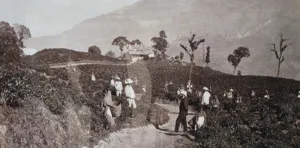
The story of South India's tea begins in the Nilgiris district of Tamil Nadu. The first experimental attempts to plant tea in the region occurred in 1832–1835, led by British colonial officials using seeds procured from China. Early trials took place in places like Ketti and Ootacamund (Ooty), and by the mid-19th century, it became evident that the cool climate and hilly terrain of the Nilgiris were conducive for tea cultivation. The government and private individuals, such as Miss M.B.L. Cockburn in Kotagiri and Colonel Crewe in Ketti, played foundational roles in these trials, paving the way for the region to become a prominent tea-growing area.
The first commercial tea estate in the Nilgiris was the Thiashola Estate, followed by the Dunsandle Estate and others. These early plantations established the Nilgiris as the cradle of South Indian tea.
The Arrival of Chinese Prisoners and Their Role
One of the most remarkable but lesser-told stories in South Indian tea history is the significant role played by Chinese prisoners of war. In the wake of the Opium Wars and other colonial conflicts, the British transported Chinese convicts from the Straits Settlements (modern Malaysia and Singapore) to the Nilgiris between the late 1850s and late 1860s. These prisoners were initially lodged in facilities like the Lawrence School asylum and then dispersed to work on plantations, notably at Thiashola and Naduvattam. Locals still refer to one such area as "Jail Thottam," or prison garden.
The presence of these Chinese laborers was pivotal because of their knowledge of tea cultivation and processing, skills that were critical for the fledgling industry. Their expertise helped British planters establish the first high-quality crops and introduce techniques from China, the heartland of tea. Over time, many of the prisoners settled in the Nilgiris, marrying locally and leaving descendants whose heritage still traces back to these early arrivals.
The First Tea Plant in Ooty
Among the earliest successes, historical records indicate that seeds brought from China in the 1830s were planted in various experimental gardens in the Nilgiris, including the grounds of Crewe Hall in Ooty. Later trials and expanded efforts by the British and individuals like Dr. Christie and Monsieur Perrottet confirmed that Ooty was ideally suited for tea. By the 1860s, estates surrounding Ooty—especially at Thiashola—marked the true commercial beginning, with some of the oldest tea bushes still preserved at these locations today.
The "China Man Plot" of Munnar, Kerala
The spread of tea planting to Munnar in Kerala is woven with a unique, personal tale. Records and local lore tell of John Antony Ajoo, a Chinese man who worked in the Nilgiris and was later employed by A.W. Turner (a pioneering planter) in Munnar. Ajoo established a tea plot in Munnar known as the "Chinaman’s Field" (or "China Man Plot"), one of the earliest and most iconic tea plantings in the region. This plot remains a symbol of the cross-cultural beginnings of Kerala's tea industry, where Chinese expertise met British enterprise and local labor.
Legacy
Today, the Nilgiris and Munnar are world-renowned tea regions, but their story is rooted in cross-cultural exchange—British ambition, Chinese expertise (even if supplied involuntarily), and remarkable local adaptation. The legacy of the Chinese prisoners, visible in the descendants still living in Ooty, lends a unique human dimension to the scenic plantations, while legends like the China Man Plot highlight the cosmopolitan and sometimes turbulent roots of South India's tea.